Data is everywhere. So is duplication.
How is technology helping to make our transport routes more efficient and safe? Here are some of the key insights from ITS Australia Summit in 2026.
ARTICLE
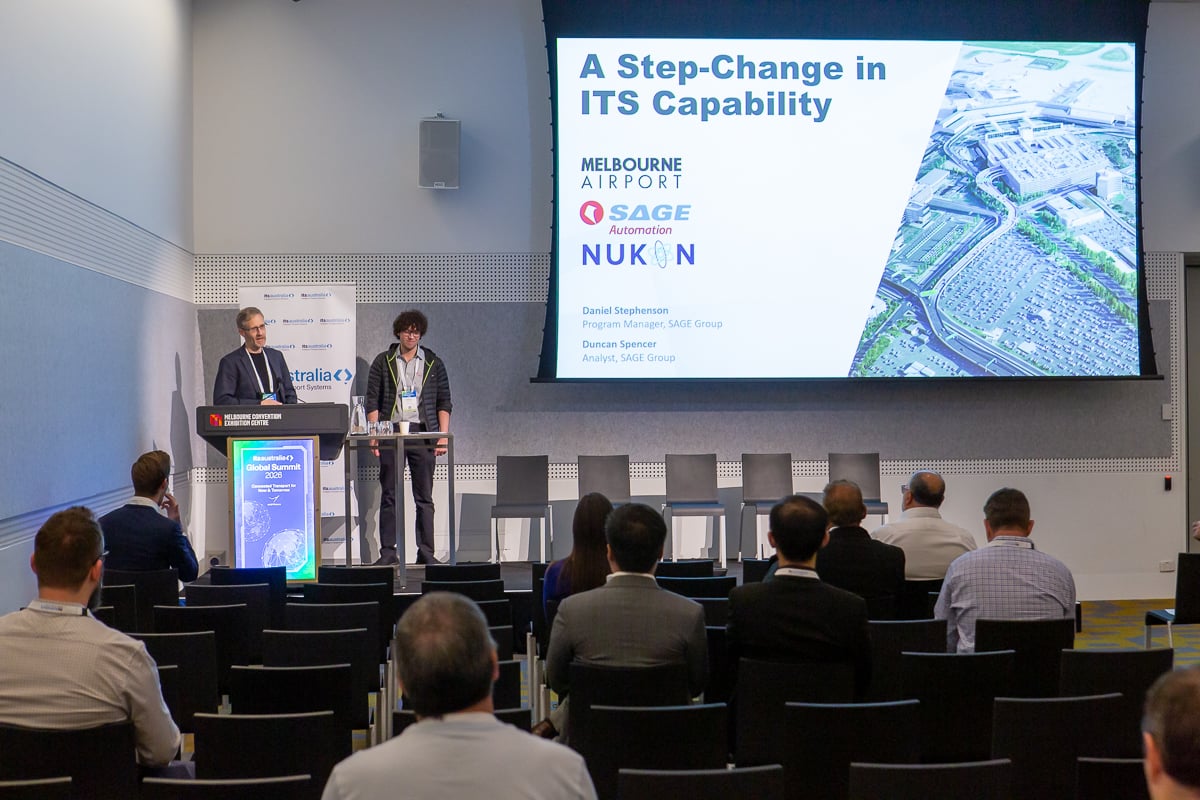
As transport networks become more complex, operators need greater visibility, control and flexibility to respond to incidents, manage traffic flows and maintain safe operations.
At the ITS Global Summit 2026, Daniel Stephenson, Program Manager, and Duncan Spencer, Analyst, shared how SAGE delivered an advanced Operations and Maintenance Control System (OMCS) for Melbourne Airport's new elevated road network, creating a universal and unified platform for traffic and ITS asset monitoring and control.
Melbourne Airport's new elevated road infrastructure introduces significant benefits for traffic movement around the precinct, but with it comes a price – the need to rapidly and effectively deal with the common operational challenge of overheight vehicles.
Often caused by confused or unfamiliar drivers operating trucks, vans or vehicles with raised trays, overheight vehicle incidents can create safety risks, traffic disruptions and operational inefficiencies when approaching low-clearance structures. At Melbourne Airport, these incidents historically required manual intervention, ad-hoc traffic management and supervised vehicle escorts.
The challenge extended beyond overheight detection. Multiple field assets operated across separate systems, requiring manual monitoring and providing limited situational awareness for operators. Incident logging was largely manual, and valuable traffic and operational data was difficult to capture and analyse.
The project aimed to transform traffic operations through a unified OMCS capable of integrating existing operational technology assets while providing a centralised view of the network.
The new system delivers:
Centralised monitoring and control of ITS infrastructure
Automated overheight vehicle detection and response
Digital directional signage for dynamic traffic management
Variable speed limit and lane use management capabilities
Integrated incident management and logging
Traffic data collection and historical reporting
Enhanced operator visibility and situational awareness
By consolidating previously disconnected systems, operators can now manage incidents more effectively while gaining access to the operational data needed to support future improvements.
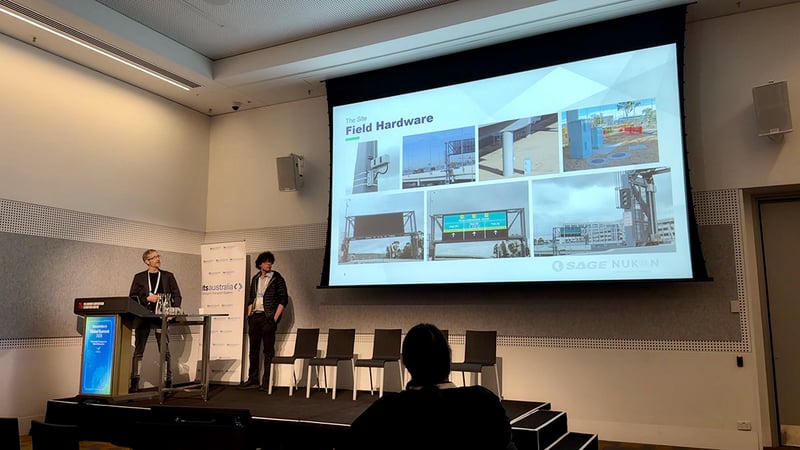
Pictured above: Daniel Stephenson and Duncan Spencer presented the development of a tailored Operations Management and Control System (OMCS) that gives Melbourne Airport's Ground Control team real-time visibility and control of the road network, supporting smoother operations, improved incident response and enhanced public safety.
The solution incorporates an extensive network of field infrastructure across the airport precinct, including:
Five Digital Directional Signs (DDS)
Multiple overheight vehicle detection systems
Axle-based vehicle detectors
Variable Speed Limit Signs (VSLS)
Lane Use Management Signs (LUMS)
Traffic signals and boom gates
Modern ITS field cabinets
Importantly, the ITS infrastructure was delivered within an active civil construction environment, requiring close coordination between multiple project stakeholders while maintaining operational continuity around the airport.
The project team acknowledged contributions from Aurecon, SMEC, TrafficWorks, Melbourne Airport (APAM), RPI and SWC throughout the delivery process.
A key capability of the system is the automated detection and management of overheight vehicles.
When an overheight vehicle is detected, the system automatically initiates response processes and operators are able to route the errant vehicle safely to a dedicated exit ramp, helping reduce traffic disruption and minimise operational risk.
A soft launch of the overheight vehicle recovery process commenced in August 2026, allowing operators to trial the system, validate performance and refine operational procedures ahead of full deployment. The trial provides valuable opportunities to build operator familiarity while identifying practical improvements before the complete operational rollout.
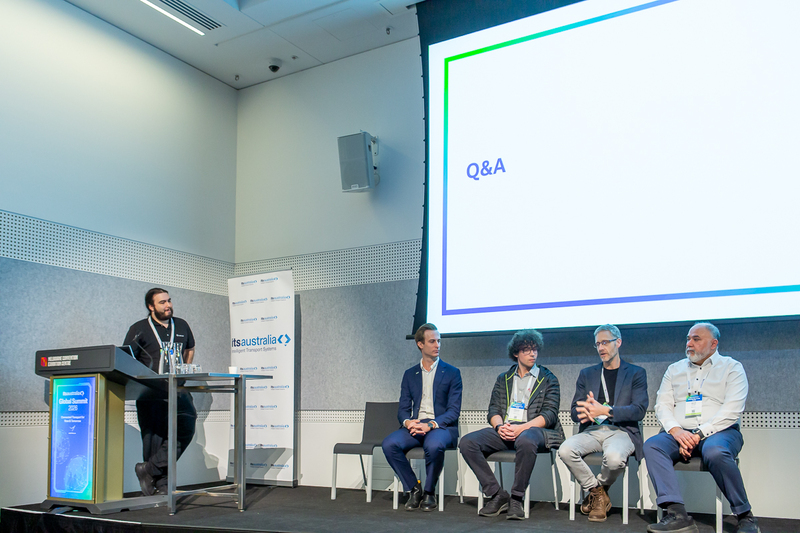
Pictured above: Duncan Spencer and Daniel Stephenson during the Q&A session.
The OMCS has been designed around principles that challenge traditional operational technology architectures.
Rather than creating another proprietary "black box" system, SAGE developed a scalable, modular platform built on open technologies and industry-standard components. The solution uses a microservices architecture, MQTT communications, Kubernetes orchestration and Ignition SCADA as the operator interface layer.
This modern architecture delivers several benefits:
Scalability: New devices and new sites can be added without requiring extensive system redesign. The platform can expand across multiple locations while maintaining a common operating environment.
Flexibility: System updates, device changes and traffic management plans can be deployed through configuration and database updates rather than complex software releases, reducing downtime and operational impact.
Security: The platform incorporates modern cybersecurity practices, including role-based access control, authentication integration and comprehensive auditability of operator actions.
As transport operators face increasing pressure to improve safety, efficiency and customer experience, the ability to integrate and manage diverse ITS assets through a common operational platform is becoming increasingly important.
The Melbourne Airport project demonstrates how modern software architecture, intelligent control systems and operational technology can be combined to create smarter, more responsive transport environments. By moving from fragmented systems and manual processes to a unified, data-driven operating model, transport operators can improve decision-making, reduce risk and unlock greater value from their existing infrastructure investments all without the threat of “black box” technical and commercial lock-in.
For SAGE, the project represents more than the delivery of a control system. It showcases a new approach to ITS operations that is scalable, adaptable and ready to support the future demands of intelligent transport networks.
Interested in more insights like this? Subscribe to The SAGE Signal for the latest updates and exclusive highlights from across SAGE Group.
How is technology helping to make our transport routes more efficient and safe? Here are some of the key insights from ITS Australia Summit in 2026.
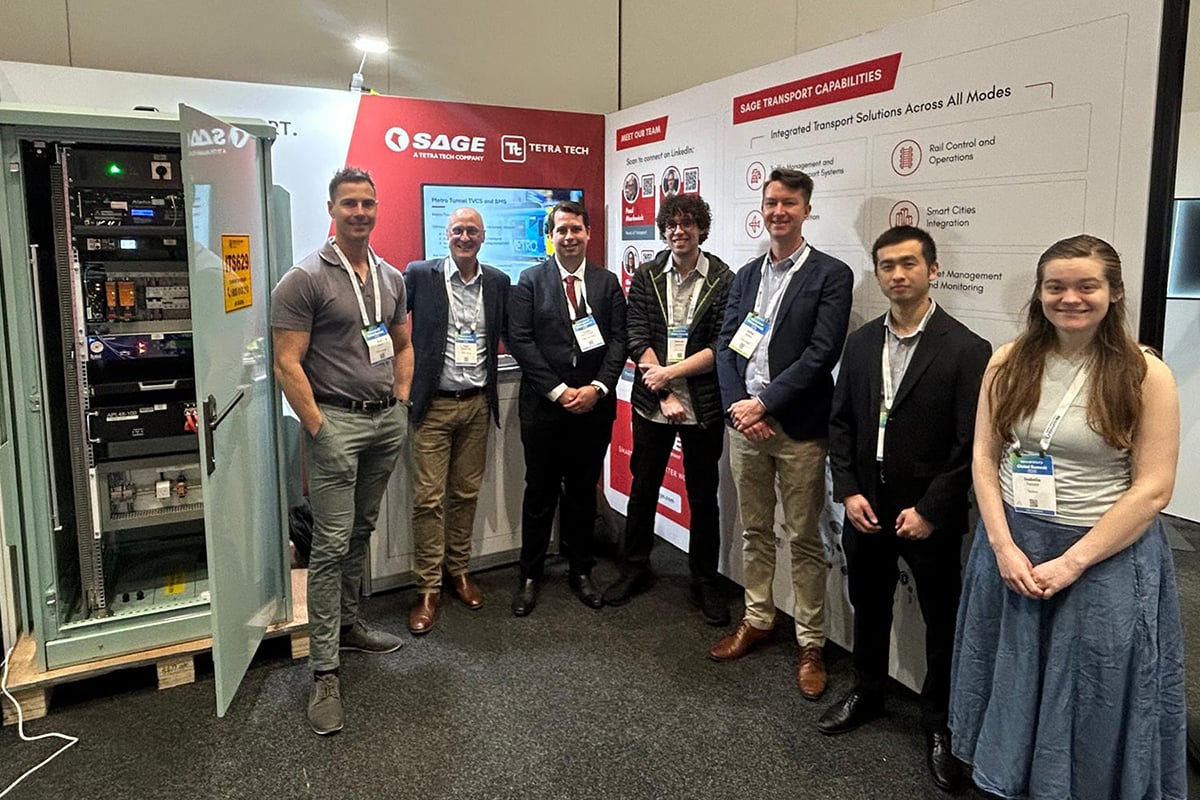
How is technology helping to make our transport routes more efficient and safe? Here are some of the key insights from ITS Australia Summit in 2026.
 Christian Chong-White : October 16, 2026
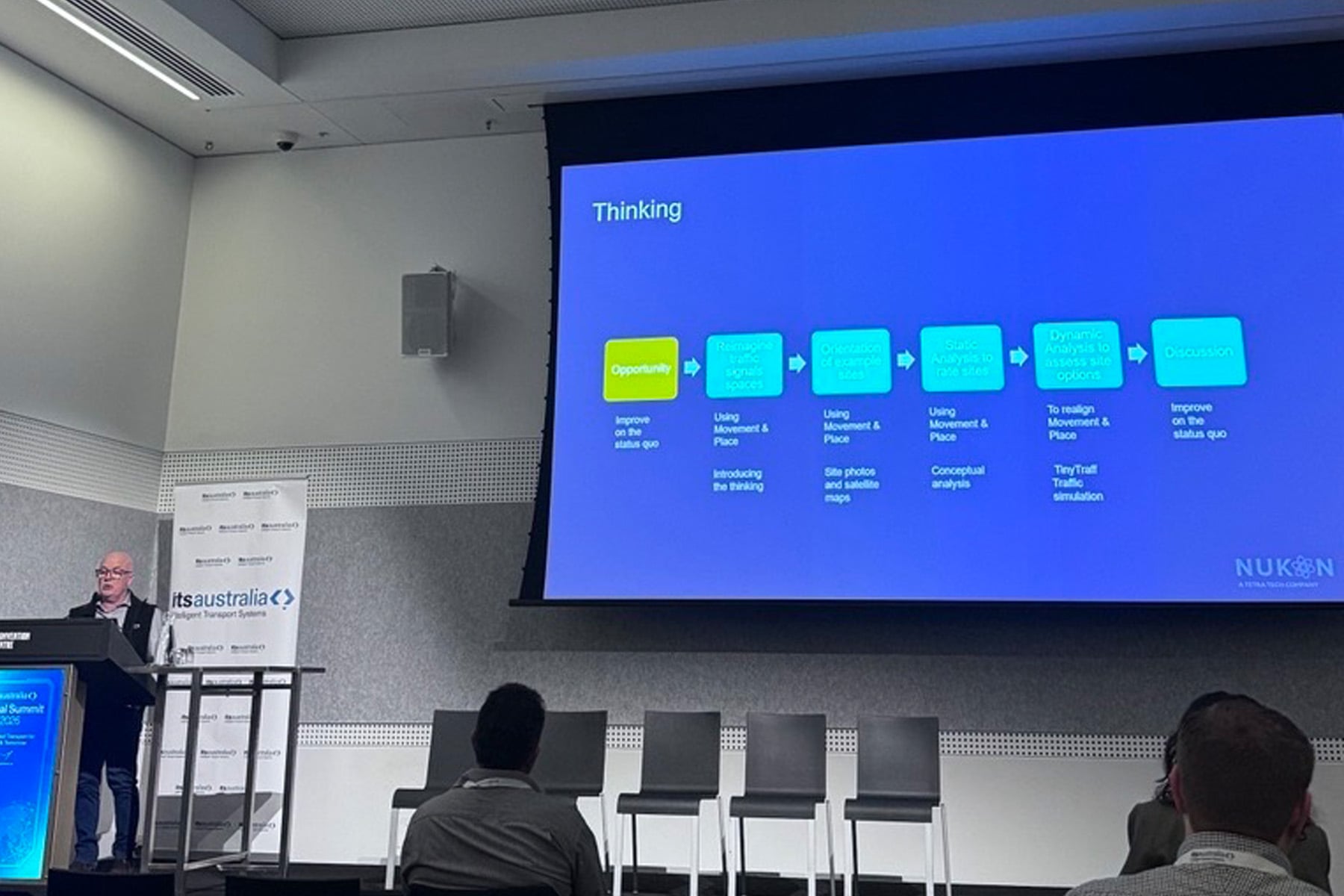
Explore how traffic signals can be designed for people, enhancing pedestrian experiences and community outcomes through innovative changes and...