How IoT devices are improving road safety at rural intersections
A new intelligent warning system being trialed across South Australia encourages safer road user behavior, particularly for rural intersections.
ARTICLE
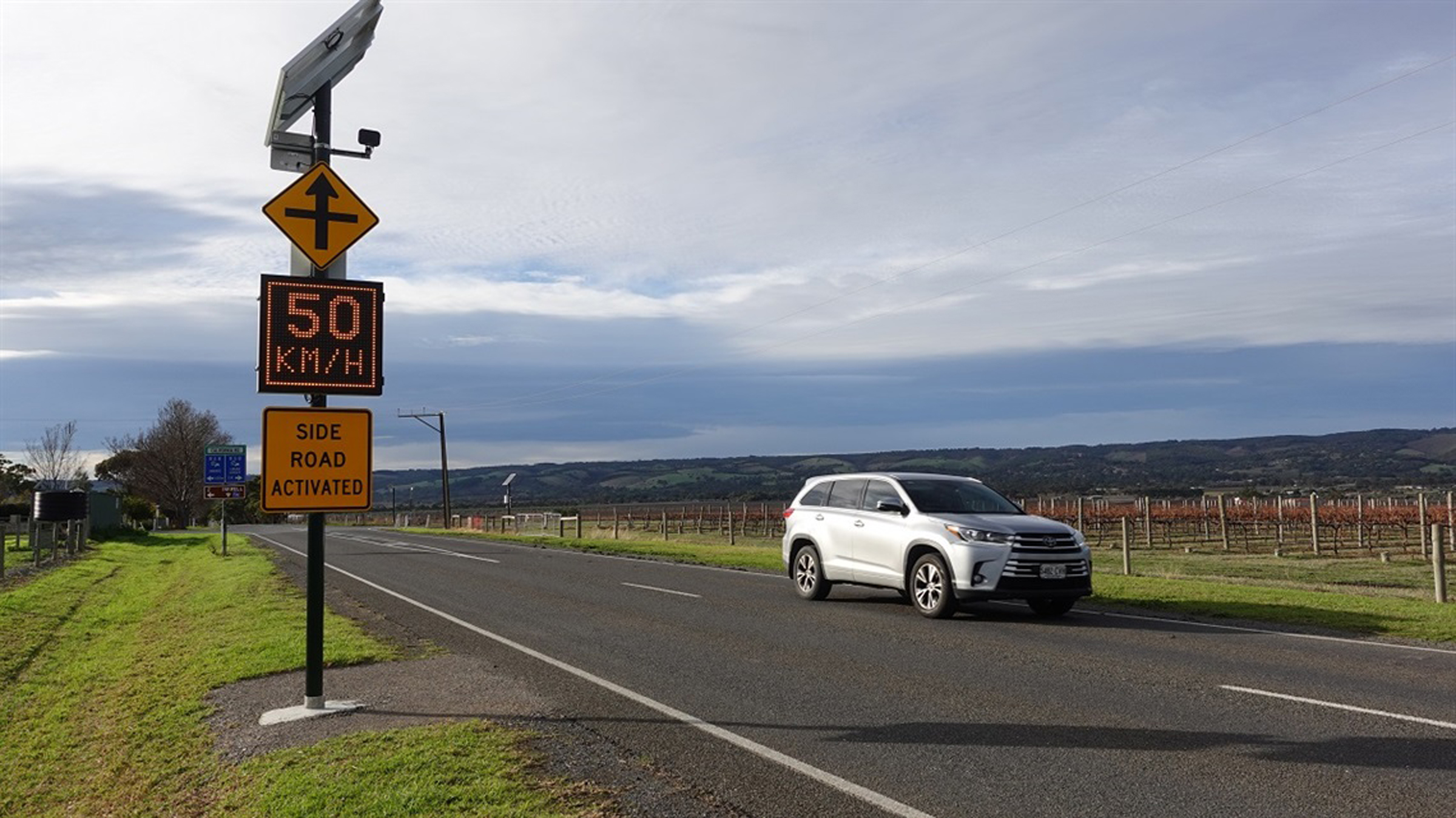
On rural roads, danger often hides in familiarity. In the McLaren Vale region, the City of Onkaparinga Council faced a serious safety challenge at high-risk intersections, where local drivers could become complacent and visitors unfamiliar with the area could misread traffic conditions.
This mattered because rural and remote roads account for two-thirds of fatal crashes in Australia. Improving safety at these intersections was not just about traffic management. It was about protecting families, freight movements, and visitors travelling through the region.
With State Government funding and support from the Department for Infrastructure and Transport, SAGE delivered RJAWS Lite at five high-risk intersections. The Rural Junction Active Warning System is a solar-powered, radar-based solution that provides real-time alerts to approaching drivers. It was developed as a smarter and more scalable alternative to traditional treatments such as roundabouts, which can be expensive and disruptive to install.
What made the system different was its selective activation logic. Rather than displaying warnings constantly, alerts were triggered only when risk was elevated. This included situations where a vehicle approached from a minor road at speed or where conflicting traffic movements were detected. That approach helped keep warnings meaningful and reduced the risk of drivers becoming desensitised.
Built on SAGE’s experience delivering around 600 solar-powered smart traffic signs across Australia, the solution combined radar-based vehicle detection, LED warning signage, solar power, battery backup, and remote monitoring through a Smart City dashboard. The modular design also allowed deployment without trenching or grid connections, making it faster and more practical for rural settings.
The results were promising. At Chalk Hill Road, early outcomes showed a 66 per cent reduction in crashes, from 2.57 per year to 0.86. Beyond the numbers, the project demonstrated a practical model for improving rural road safety in a cost-effective way.
Just as importantly, RJAWS Lite showed the value of collaboration. By bringing together government, academia, and industry, the project created a nationally relevant blueprint for safer rural intersections. It also highlighted how evidence-based design and human behaviour insights can shape smarter infrastructure outcomes.
For communities looking to improve safety without major civil works, RJAWS Lite offers a compelling example. It shows that with the right technology, thoughtful system logic, and a scalable delivery model, safer rural intersections are achievable.
Key benefits
What made it stand out
Recognition

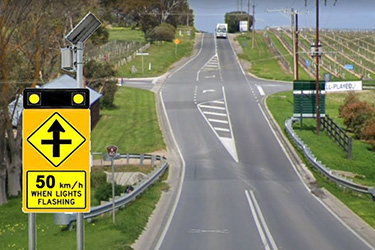
A new intelligent warning system being trialed across South Australia encourages safer road user behavior, particularly for rural intersections.
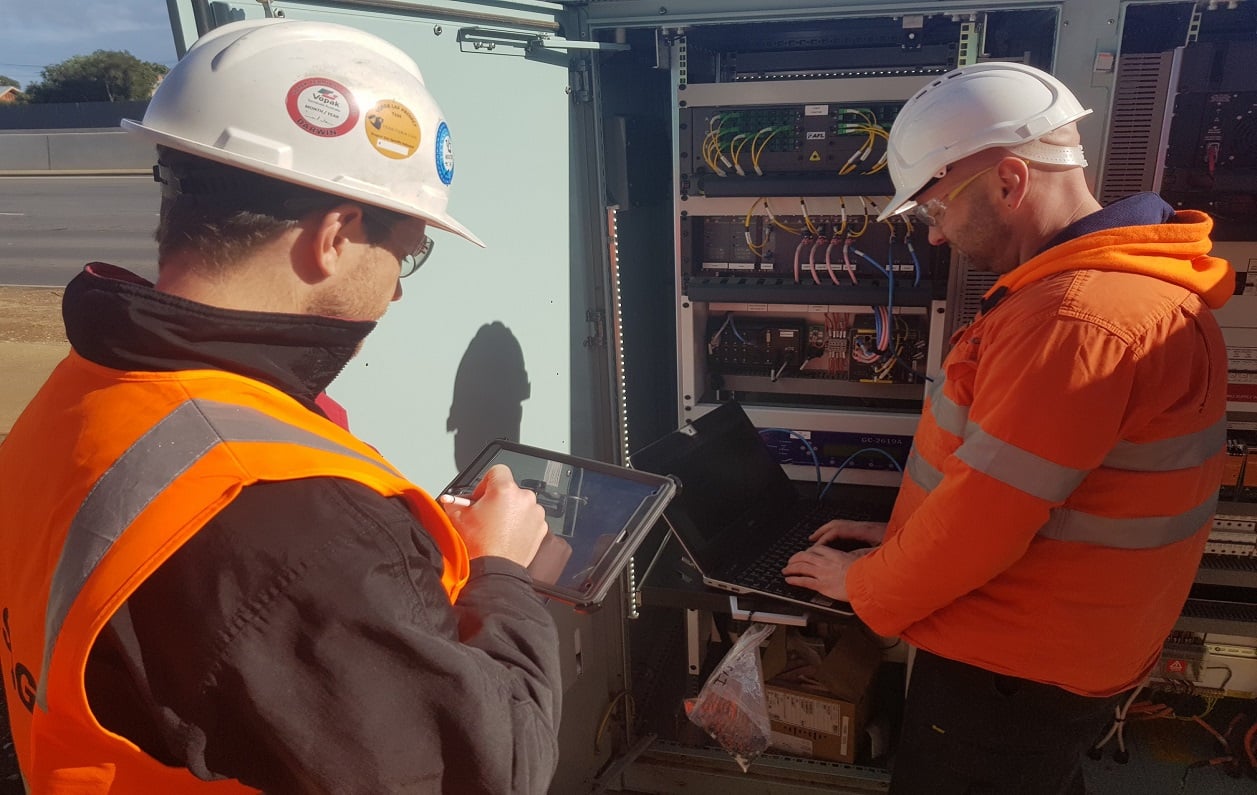
We outline 6 real world IoT applications delivered for clients to show how affordable, scalable and flexible the industrial internet of things can...

Powering Remote Communities Through Intelligent Renewable Integration