Nukon recognised by Seeq for advancing industrial analytics innovation
Nukon has been recognised with the Innovation and AI Excellence award for the EMEAPAC region at the Seeq Partner Awards, held at the Seeq Partner...
NEWS

SAGE Group and Claroty brought together critical infrastructure operators in Perth to talk honestly about digitisation, AI-enabled threats and what resilience actually looks like in an operational environment. Here is what the panel discussed and what it means for your organisation.
On 5 November 2026, SAGE Group and partner Claroty hosted an industry evening at The Shoe Bar & Café. The conversation drew operators, engineers and technology leaders from across the water, energy, mining, aviation and industrial sectors.
The panel:
Jeremy Hulse - Executive General Manager of Cyber Security, SAGE Group
They did not come to deliver a sales pitch. They came to have an honest conversation about where operational technology (OT) cyber security stands today, what AI is changing and what organisations should do about it.
The main takeaway was both reassuring and sobering: AI is speeding up cyber risk, but the fundamentals have not changed. And too many organisations are heading straight for a technical solution without getting the fundamentals right first.
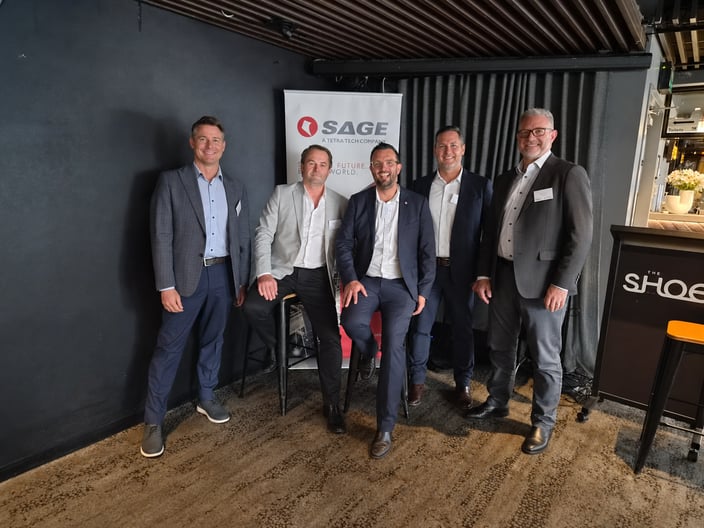
Pictured, left to right: Drew Dylan - Business Development Manager, Cyber Security, SAGE Group; Jeremy Hulse - Executive General Manager of Cyber Security, SAGE Group; Gareth Williams - Head of Digital, SAGE Group; Daniel Rolfe - Business Development Manager, SAGE Group; Jason Pearce - Field Chief Technology Officer, Claroty.
One theme emerged consistently throughout the discussion: organisations should not avoid digitisation because of cyber risk. Instead, they should ensure digital initiatives are designed with security from the outset.
As operational technology (OT), cloud platforms and enterprise systems become increasingly connected, organisations gain valuable insights from operational data, enabling improved decision-making, maintenance planning and operational efficiency. However, every new connection introduces potential risk that must be understood and managed.
According to the panel, the question should not be whether organisations connect their systems, but how they do so safely. Building cyber security into architecture, procurement and project design from the beginning is significantly more effective than attempting to add protections later.
Artificial intelligence is reshaping both cyber attacks and cyber defence. While AI can help organisations analyse large volumes of operational data and identify vulnerabilities more efficiently, it can also accelerate the speed at which threat actors discover and exploit weaknesses.
The panel discussed how AI is compressing the time available for defenders to respond. In OT environments, where patching systems is not always practical due to operational or safety constraints, organisations must increasingly rely on compensating controls, monitoring and layered security measures.
Importantly, the panellists stressed that AI does not change the fundamentals of cyber security.
Many successful attacks still exploit familiar weaknesses such as default credentials, unmanaged remote access and known vulnerabilities. Good security hygiene remains one of the most effective defences available.
Unlike traditional IT environments, operational technology often supports essential services and critical infrastructure. In many cases, systems cannot simply be switched off when a security issue arises.
The discussion highlighted that resilience, rather than shutdown, should be the primary objective. Organisations need the ability to maintain safe operations while managing cyber incidents, balancing security, safety and availability.
For operators of critical infrastructure, this means understanding which systems are essential, planning for potential disruption and testing their ability to continue operating under adverse conditions.
As industrial environments become more connected, third-party access continues to be a significant area of concern.
The panel noted that the most successful organisations take ownership of how vendors and OEMs access their systems. Rather than allowing unrestricted connections, leading operators establish secure remote-access gateways, define clear access requirements and engage vendors early to ensure solutions are both secure and operationally practical.
The discussion also reinforced the importance of understanding every pathway into an environment, including temporary connections, legacy access arrangements and unauthorised devices that may have been added over time.
A recurring message throughout the event was that cyber resilience cannot sit solely with IT, OT or cyber security teams.
While asset owners remain ultimately responsible for the resilience of their operations, achieving meaningful cyber security outcomes requires collaboration across engineering, operations, IT, executive leadership, suppliers and technology partners.
Organisations that succeed are typically those that establish clear ownership, understand their risks and develop a structured roadmap rather than relying on individual technologies to solve the problem.
Drawing on SAGE's experience delivering OT cyber security programs through its C-PASS framework, attendees were encouraged to focus on several practical actions:
Identify the operational consequences the organisation cannot afford to tolerate.
Establish a clear baseline of assets, configurations, patch status and maintenance arrangements.
Clarify ownership of cyber risk across IT, OT, engineering and leadership teams.
The conversation reinforced an important reality for industrial organisations: digital transformation, AI and increased connectivity are creating significant opportunities, but they must be underpinned by robust cyber security practices and operational resilience.
As critical infrastructure operators continue to modernise their environments, success will depend on understanding risk, securing connections, controlling access and building resilience into every stage of the asset lifecycle.
As the panel concluded, the goal is not to slow down innovation, but to enable it securely.
If the 90-day priorities raised questions about where your organisation stands, the SAGE Group Cyber Security team is here to help. Whether you’re mapping your assets, tightening remote and vendor access, or building a roadmap that suits your operations, we’ll work through it with you and share what we’ve learnt from delivering OT cyber security programs across critical infrastructure.
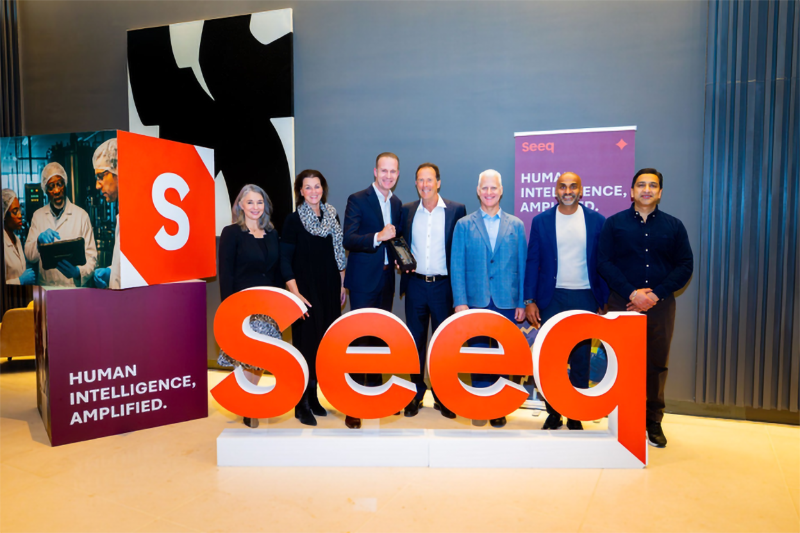
Nukon has been recognised with the Innovation and AI Excellence award for the EMEAPAC region at the Seeq Partner Awards, held at the Seeq Partner...

Nukon's premiere software integration partner, TilliT, is manufacturing's do-it-all platform, delivering forward-looking insights, real-time...

Nukon will present its predictive analytics tool at PI World on April 23-27 in San Francisco. Nukon used pattern matching and predictive analytics to...